
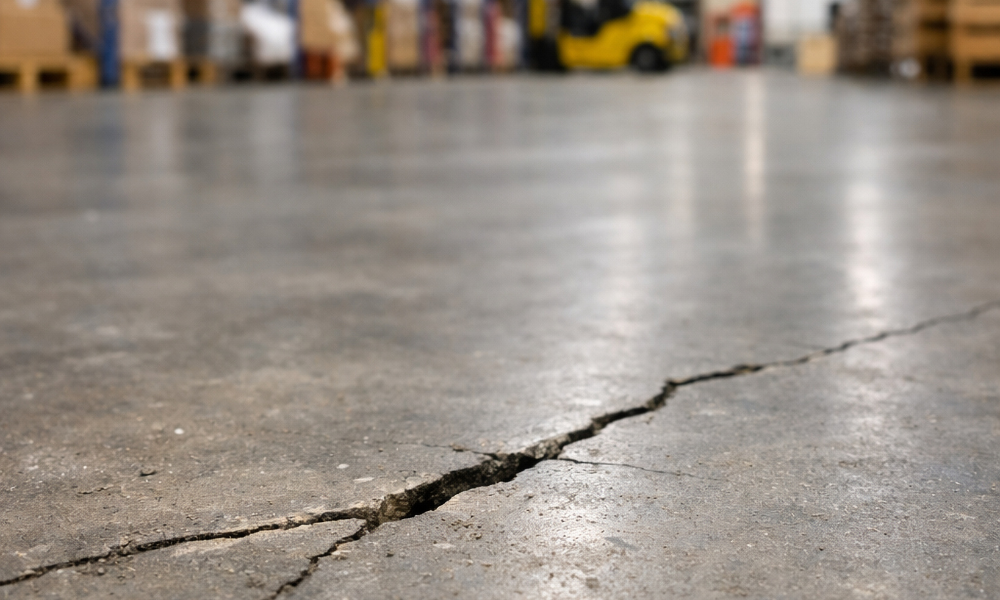
A damaged warehouse floor rarely announces itself all at once. It starts with a crack you step over every day, a rough patch near the loading dock, a joint that’s been shifting for months. Easy to ignore – until it isn’t.
The reality is that warehouse floors take a sustained beating. Forklifts, pallet jacks, heavy racking, chemical spills, and the constant pressure of daily operations all compound over time. And when the floor starts to fail, the consequences go beyond aesthetics. Damaged warehouse floors are a direct safety risk, a source of equipment wear, and – if left long enough – a much more expensive problem than they needed to be.
The question most facility managers face isn’t whether to act. It’s which action is right: resurface, repair, or replace. Getting that decision right saves time, money, and operational disruption. Here’s how to think through it.
Why Warehouse Floors Deteriorate
Concrete is durable, but it isn’t indestructible. In a warehouse environment, the combination of heavy machinery traffic, point loading from racking systems, chemical exposure, and moisture creates conditions that break down even well-poured slabs over time.
The most common causes of warehouse floor deterioration include:
- Forklift and vehicle traffic – hard wheels, constant turning in loading zones, and repetitive load cycles cause joint damage and surface wear
- Impact loading – dropped pallets, heavy machinery, and racking installations create surface cracking and chipping
- Chemical spills – oils, cleaning agents, and industrial chemicals break down the surface layer of concrete over time
- Moisture and hydrostatic pressure – water beneath or within the slab causes heaving, delamination, and coating failure
- Poor original construction – inadequate compaction, thin slabs, or incorrect joint placement accelerates deterioration under load
- Age – even well-maintained concrete slabs have a service life, and older floors are more susceptible to compound damage
Understanding the cause matters as much as identifying the damage. A repair that doesn’t address the underlying issue will fail – sometimes faster than the original problem.
Resurface: When the Slab Is Sound But the Surface Isn’t
Resurfacing is the right call when the structural integrity of the slab is intact but the surface has deteriorated to the point where it’s affecting safety, operations, or the ability to apply a new coating.
Signs that resurfacing is appropriate include widespread surface scaling, shallow cracking, general wear and roughness across a large area, and surfaces that have been stained or chemically damaged but haven’t compromised the slab beneath.
Resurfacing typically involves grinding back the damaged surface layer, preparing the substrate correctly, and applying a new bonded layer – often an epoxy coating, polyurethane system, or polymer-modified overlay – that restores the floor to a smooth, safe, and durable finish. For warehouses with high forklift and machinery traffic, a properly applied epoxy or polyurethane system also adds chemical resistance and slip protection.
It’s worth noting that resurfacing is only as good as the preparation underneath it. At FKR Constructions, surface preparation – including grinding, priming, and moisture testing – is treated as a non-negotiable first step, not an afterthought. A coating applied over an inadequately prepared surface will fail regardless of the product used.
Repair: When Damage Is Localised and the Slab Has Life Left
Not every damaged warehouse floor needs a full resurfacing. When the damage is isolated to specific areas – a cracked section near a loading dock, joint failure along a traffic line, spalling around a column base – targeted repairs are often the most efficient and cost-effective solution.
Common repair methods include:
Epoxy crack injection – used for both structural and non-structural cracks, epoxy injection fills and seals the crack from within, restoring load transfer and preventing further propagation. At FKR, the cause of the crack is assessed first, because injecting a crack without addressing what caused it is only ever a temporary fix. Learn more about FKR’s epoxy crack injection service.
Concrete patching – for localised surface damage, spalling, and chipping, patching compounds (particularly high-strength products from brands like MAPEI and Ardex) restore the surface without requiring full resurfacing. Patching is then ground flush to ensure a smooth, consistent finish for vehicle movement.
Floor levelling – where sections of the slab have settled or become uneven, self-levelling compounds restore a flat, safe surface. This is particularly important in areas where forklift stability and load safety are critical. According to Safe Work Australia, uneven floors are a leading contributor to workplace injuries in warehouse environments.
Joint repair – expansion and control joints that have deteriorated under load are a major source of forklift tyre wear and vehicle damage. Restoring or replacing joint fillers with flexible, load-rated materials is a high-value repair that extends the life of the surrounding slab and protects equipment.
The key principle with repairs is early intervention. A crack repaired today is significantly cheaper than a slab failure managed in six months. Regular inspections – ideally every six to twelve months in high-traffic facilities – are the most effective way to catch damage before it escalates.
Replace: When the Slab Can No Longer Do Its Job
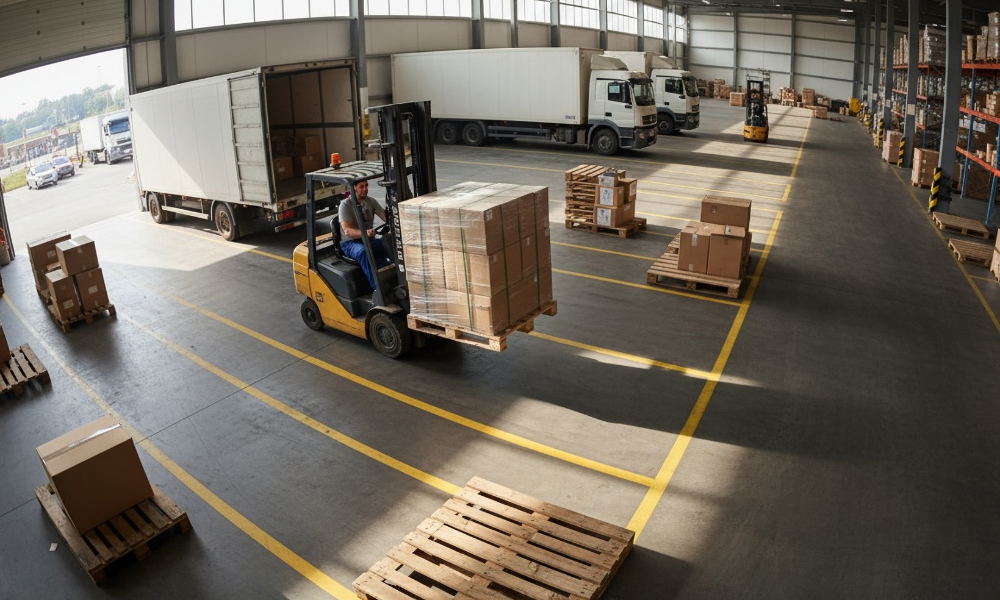
Full slab replacement is the most disruptive and costly option, which is exactly why it should be reserved for situations where it’s genuinely necessary. The indicators that replacement is the right call are structural, not cosmetic.
Replacement is warranted when:
- The slab has lost structural integrity and can no longer safely support operational loads
- Cracking is deep, widespread, and has compromised the slab throughout – not just at the surface
- Slab settlement is significant and cannot be corrected through levelling or repair
- The existing slab is too thin or was poorly constructed to support current load requirements
- Cumulative repair costs are approaching or exceeding the cost of a new pour
It’s worth getting an expert assessment before committing to replacement. In many cases, what looks like a floor that needs to be pulled out can actually be salvaged through a combination of structural repairs and resurfacing – at a fraction of the cost and with far less downtime. The Australian Building Codes Board sets the standards that govern structural concrete in commercial and industrial buildings, and any replacement work should be carried out in accordance with those requirements.
Getting the Decision Right
The resurface, repair, or replace decision comes down to three things: the extent of the damage, the structural condition of the slab, and the operational demands placed on the floor going forward.
A surface that looks bad but is structurally sound is a resurfacing job. Isolated damage on an otherwise healthy slab is a repair job. A slab that can no longer safely support the loads it needs to carry is a replacement job.
Getting an experienced eye on the problem before committing to a solution is always worth it. At FKR Constructions, the team assesses warehouse floor damage across Melbourne – helping facility managers make the right call, scope the work correctly, and get the floor back to full performance with minimal disruption.
Call FKR Constructions on 1300 570 888 or visit fkrconstructions.com.aufor a free quote.